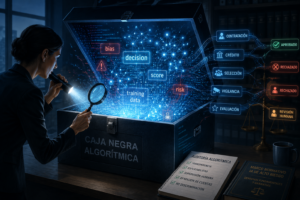


El trabajo en plataformas, la digitalización y la inteligencia artificial están impulsando transformaciones decisivas en las relaciones laborales contemporáneas. La incorporación de sistemas algorítmicos en la gestión del trabajo, la evaluación automática del rendimiento o la toma de decisiones en recursos humanos plantea desafíos inéditos tanto para el Derecho del Trabajo como para las instituciones sociales encargadas de garantizar condiciones de empleo dignas y justas.
Con el objetivo de analizar estas transformaciones y los retos regulatorios que generan, hemos organizado el Congreso Internacional “Platform Work Directive, Digitalisation and AI: Evaluation and national challenges”, que se celebrará el 19 de junio de 2026 en el Campus Puerta de Toledo de la Universidad Carlos III de Madrid.
Este encuentro, organizado conjuntamente por la Universidad Carlos III de Madrid, el Instituto Universitario de Derecho y Economía, y la Pázmány Péter Catholic University de Budapest (Labour Law Department), reunirá a especialistas internacionales para examinar el impacto del nuevo marco europeo —incluida la Directiva (UE) 2024/2831 sobre trabajo en plataformas, la Regulación de Inteligencia Artificial 2024/1689 y otras normas emergentes— en las condiciones laborales, la gestión del trabajo digital y el diálogo social.
Platform work, digitalisation and artificial intelligence are driving decisive transformations in contemporary labour relations. The incorporation of algorithmic systems into work management, automated performance evaluation and decision-making in human resources poses unprecedented challenges both for Labour Law and for the social institutions responsible for ensuring fair and decent working conditions.
With the aim of analysing these transformations and the regulatory challenges they generate, we have organised the International Conference “Platform Work Directive, Digitalisation and AI: Evaluation and National Challenges”, which will take place on 19 June 2026 at the Puerta de Toledo Campus of Universidad Carlos III de Madrid.
This event, jointly organised by Universidad Carlos III de Madrid, the University Institute of Law and Economics, and Pázmány Péter Catholic University of Budapest (Labour Law Department), will bring together international specialists to examine the impact of the new European framework — including Directive (EU) 2024/2831 on platform work, the Artificial Intelligence Regulation 2024/1689 and other emerging rules — on working conditions, the management of digital labour and social dialogue.
La jornada se desarrollará en inglés y español, con asistencia gratuita previa inscripción [INSCRIPCIÓN CERRADA]. The seminar will be conducted in English and Spanish, with free attendance subject to prior registration [REGISTRATION CLOSED].
Las presentaciones pueden descargarse en el programa que consta abajo y el vídeo visionarse aquí. The presentations can be downloaded from the program listed below, and the video can be viewed here.
| 9:00-9:30. Salón de Grados | Registration & welcome |
| 9:30-10:00. Salón de Grados | Opening lecture / Conferencia de inaguración: «Hacia un Derecho Digital del Trabajo: Algoritmos e IA» by Jesús R. Mercader (UC3M) |
| 10:00-12:00. Salón de Grados | Keynote section Chair: Daniel Perez del Prado, Universidad Carlos III de Madrid Daniel Perez del Prado, Universidad Carlos III de Madrid: Artificial Intelligence and Employment Implications under EU Regulation 2024/1689 Teresa Coelho Moreira, University of Braga: Algorithmic Management in Platform Work: A Joint Reading of Directive (EU) 2024/2831 and the EU Artificial Intelligence Act Jeremias Prassl, University of Oxford: The Right to a Human Decision Tamás Gyulavári, Pázmány Péter Catholic University: Digitalisation of work challenge – Is labour law adaptable or obsolete? |
| 12:00-12:30 | Coffee Break / Pausa Café |
| 12:30-14:00. Aulas/Rooms: 1.A.08, 1.A12 y 1.A.13 | Panel Sessions / Paneles de presentación de comunicaciones [Access to speaker distributions by panel / Acceso a la distribuciones de de intervinientes por panel] |
| 14:00-15:00 | Lunch break / Pausa Comida |
| 15:00-17:00. Salón de Grados | Keynote section Chair: Tamás Gyulavári, Pázmány Péter Catholic University Tonia Novitz, University of Bristol: Asserting the right to strike in a digital era – responses to algorithmic management, artificial intelligence and their component parts Elisabeth Brameshuber, University of Vienna: Information and consultation rights in a transnational digital world of work: assessing the need for a conflict of law-set of rules José María Miranda Boto, University of Santiago de Compostela: Information and consultation in the digital era: achievements and challenges? Silvia Rainone, ETUI: Collective bargaining in the age of AI: Rethinking industrial relations frameworks in light of empowerment dynamics |
| 17:00-17:15 | Cofee Break |
| 17:15-18:45. Aulas/Rooms: 1.A.08, 1.A12 y 1.A.13 | Panel Sessions / Paneles de presentación de comunicaciones [Access to speaker distributions by panel / Acceso a la distribuciones de de intervinientes por panel] |
| 18:45 | Closure |
| COMITÉ ORGANIZADOR – Organizing Committee | |||
| Daniel Pérez del Prado | Director | UC3M | PTU |
| Alberto Barrio Fernández | Comité Organizador | UCM | PAD |
| Noelia de Torres Bóveda | Comité Organizador | UCM | PIF |
| Matthieu Chabannes | Comité Organizador | UCM | PAD |
| Iván Williams Jiménez | Comité Organizador | UC3M | PA |
| Lourdes Sánchez-Galindo | Comité Organizador | UC3M | PIF |
| COMITÉ CIENTIFICO / Scientific Committee | |||
| Jesus Mercader | Comité científico | UC3M | CU |
| Ana de la Puebla | Comité científico | UAM | CU |
| Catherine Barnard | Comité científico | University of Cambridge | CU |
| Paul Schoukens | Comité científico | KU Leuven | CU |
| Marie Cécile Escande-Barniol | Comité científico | Université Lyon 2 – Lumière | PTU |
| Daniel Perez del Prado | Comité científico | UC3M | PTU |
| Tamás Gyulavári | Comité científico | Patzmany University | CU |
Sus contenidos forman parte de los Proyectos Nacionales de Investigación «Dimensión socio-laboral de los riesgos asociados al cambio tecnológico: conceptualización, prevención y reparación» (Proyecto PID2021-124979NB-I00) y del «Transformación digital y relaciones laborales: de la flexiseguridad a la tecnoseguridad» (PID2024-160574OB-C21).